Aluminum vs Steel Fixed Access Ladders: Which Is Better for Your Project?
When ordering a fixed access ladder, one of the first decisions is whether the ladder should be aluminum, steel, galvanized steel, or stainless steel. For many commercial roof access and maintenance applications, aluminum and steel are the two most common options.
Both materials can work well when the ladder is properly designed, fabricated, and installed. The better choice depends on the project environment, budget, finish requirements, weight, corrosion exposure, and jobsite conditions.
At Industrial Ladder and Scaffolding, we supply fixed access ladders for contractors, building owners, facility managers, and maintenance teams throughout Northern California. This guide explains the main differences between aluminum and steel fixed access ladders so you can choose the right material for your project.
Quick Answer
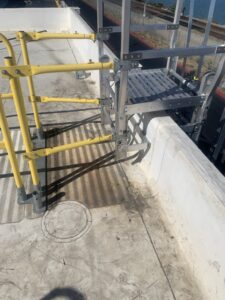
For many exterior roof access applications, aluminum is often the preferred choice because it is lightweight, corrosion resistant, clean looking, and easier to handle during installation.
Steel may be the better choice when the project requires a specific painted finish, heavier-duty impact resistance, a structural steel design, or a material specifically called out in the project specifications.
The best material depends on the actual project requirements.
Aluminum Fixed Access Ladders
Aluminum fixed access ladders are commonly used for commercial roof access, maintenance access, and exterior building access. Aluminum performs well in many outdoor environments and is easier to move, handle, and install compared to steel.
Common uses for aluminum fixed ladders include:
- Roof access ladders
- Wall-mounted access ladders
- Access ladders with walk-thru handrails
- Access ladders with security doors
- Fixed ladders with cages
- Maintenance access ladders
- Industrial access ladders
- Exterior building access ladders
Aluminum is a strong option when the customer wants a clean, corrosion-resistant ladder without the added weight of steel.
Steel Fixed Access Ladders
Steel fixed access ladders are commonly used in industrial, heavy-duty, and specification-driven projects. Steel is strong, rigid, and widely accepted in commercial construction.
Common uses for steel fixed ladders include:
- Industrial access ladders
- Interior mechanical access ladders
- Heavy-duty equipment access
- Painted ladder applications
- Structural steel environments
- Projects where steel is specifically required by the drawings or specifications
Steel ladders are heavier than aluminum and usually require a protective finish such as primer, paint, galvanizing, or powder coating to help protect against corrosion.
Weight and Handling
One of the biggest advantages of aluminum is weight.
Aluminum ladders are usually much easier to handle than steel ladders. This can make a difference during delivery, unloading, staging, and installation. On jobsites where the ladder needs to be lifted into position, moved through tight areas, or installed on an exterior wall, the lighter weight of aluminum can be a major benefit.
Steel ladders are heavier. That added weight may not be a problem on every job, but it can affect handling, freight, equipment needs, labor, and installation planning.
For local pickup customers, aluminum ladders are often easier to load, transport, and move at the jobsite.
Corrosion Resistance
Corrosion resistance is another major difference.
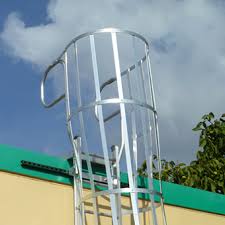
Aluminum naturally resists corrosion better than unfinished carbon steel. This makes aluminum a strong choice for many exterior ladder applications, especially where the ladder will be exposed to normal weather conditions.
Steel can also work outdoors, but it usually needs a protective finish. Common steel finishes include:
- Primer and paint
- Powder coating
- Hot-dip galvanizing
- Specialty coatings
If the finish on a steel ladder is damaged, scratched, or worn down over time, the exposed steel may rust. In outdoor environments, that maintenance should be considered.
For coastal, chemical, washdown, or highly corrosive environments, the project may require a more specific material review. In some cases, stainless steel, galvanized steel, aluminum, or fiberglass may be considered depending on the exposure.
Appearance and Finish Options
Aluminum has a clean, industrial look in its natural mill finish. For many roof access and maintenance ladders, mill finish aluminum is acceptable and does not require paint.
Aluminum can also be powder coated or anodized when a specific color is required. Powder coating is usually a better option than standard field paint when a more durable finish is desired.
Steel is often used when the project requires a painted finish. Steel can be primed, painted, powder coated, or galvanized depending on the specification.
If appearance is important, confirm the required finish before ordering.
Strength and Durability
Both aluminum and steel fixed ladders can be strong and durable when they are designed correctly.
Steel is generally stronger and more rigid as a raw material, which can make it a good option for certain heavy-duty or industrial applications. However, aluminum ladders can still be properly designed for fixed ladder use when the correct shapes, sizes, brackets, rungs, and attachments are used.
The material is only one part of the ladder design. The complete ladder system includes:
- Side rails
- Rungs
- Wall brackets
- Anchors
- Fasteners
- Supporting structure
- Safety accessories
- Installation method
A well-built ladder can still fail to perform properly if it is attached to an unsuitable surface or installed incorrectly.
Cost Considerations
Cost depends on the ladder size, material, finish, safety accessories, freight, and project requirements.
In many cases, aluminum may cost more as a material than basic unfinished steel, but it can save time and effort in handling, finishing, corrosion resistance, and installation. Steel may appear less expensive at first, but the final cost can change if the ladder requires painting, galvanizing, heavier freight, or more labor to handle.
When comparing aluminum and steel, look at the full project cost, not just the raw ladder price.
Things to consider include:
- Material cost
- Finish cost
- Freight cost
- Handling and unloading
- Installation labor
- Maintenance
- Corrosion exposure
- Project specifications
- Long-term durability
When Aluminum Is Usually the Better Choice
Aluminum is often a good choice when:
- The ladder will be used for exterior roof access
- Corrosion resistance is important
- A clean mill finish is acceptable
- Lower weight is helpful for handling and installation
- The ladder will be picked up locally or moved around the jobsite
- The project does not specifically require steel
- The customer wants a low-maintenance ladder material
- The ladder includes walk-thru handrails, cages, brackets, or other accessories
For many commercial roof access applications, aluminum is a practical and efficient choice.
When Steel May Be the Better Choice
Steel may be the better choice when:
- The project specifications call for steel
- A painted steel ladder is required
- The ladder is in a heavy industrial environment
- The ladder is part of a structural steel system
- Higher impact resistance is needed
- The project requires galvanizing
- The customer prefers steel for consistency with other building components
If the drawings or specifications call for steel, the project team should confirm whether aluminum is acceptable before substituting materials.
What About Galvanized Steel?
Galvanized steel is carbon steel with a zinc coating to help protect against corrosion. It is commonly used outdoors and in industrial environments.
Galvanized steel may be a good choice when the project requires steel but also needs better corrosion resistance than standard painted steel.
However, galvanized steel is still heavier than aluminum. The appearance is also different from mill finish aluminum or painted steel, so it should be reviewed against the project requirements.
What About Stainless Steel?
Stainless steel is typically used in more specialized environments. It may be required for food processing, water treatment, marine, chemical, washdown, or other corrosive applications.
Stainless steel is usually more expensive than aluminum or standard steel, but it may be the best option when corrosion resistance, cleanliness, or project specifications require it.
What About Painting Aluminum?
Aluminum can be painted, but standard paint may chip, scratch, or wear over time, especially in high-use areas. If the customer wants a colored aluminum ladder, powder coating is usually a better option than basic field paint.
For many roof access applications, natural mill finish aluminum is acceptable and avoids the maintenance issues that can come with painted finishes.
Do Material Choices Affect OSHA or Cal/OSHA Compliance?
The material matters, but OSHA and Cal/OSHA compliance is not based only on whether the ladder is aluminum or steel.
The full ladder condition should be reviewed, including:
- Ladder design
- Rung spacing
- Ladder width
- Climbing clearance
- Bracket spacing
- Anchorage
- Fall protection
- Cages or ladder safety systems
- Rest platforms, if required
- Top and bottom access
- Installation conditions
For a broader overview, read our Fixed Access Ladder Guide.
For measurement help, read our guide on how to measure for a fixed access ladder.
Which Material Should You Choose?
For most standard exterior roof access ladder applications, aluminum is often the best starting point. It is lightweight, corrosion resistant, clean looking, and easier to handle than steel.
Steel may be a better fit for certain industrial, structural, or specification-driven projects. Galvanized steel and stainless steel may also be appropriate when the environment or project requirements call for them.
The best choice depends on your project conditions, drawings, specifications, and installation requirements.
Need Help Choosing an Access Ladder Material?
Industrial Ladder and Scaffolding supplies fixed access ladders, roof access ladders, walk-thru handrails, ladder cages, security doors, custom brackets, and related ladder accessories for commercial and industrial projects throughout Northern California.
If you need help choosing between aluminum and steel, send us your project drawings, photos, measurements, and specifications. Our team can help review the access condition and provide a material quote.
For customers outside Northern California, select access products may also be available for online ordering and shipment through AnyHatch.com.