Fixed Access Ladder Guide: Types, Materials, Safety Accessories, Measuring, and Cal/OSHA Requirements
Fixed access ladders are used when a building, roof, platform, tank, machine, or elevated work area needs permanent access. Unlike a portable ladder, a fixed ladder is permanently attached to a structure, building, or piece of equipment.
At Industrial Ladder and Scaffolding, we help contractors, building owners, facility managers, architects, and maintenance teams select fixed access ladders for commercial, industrial, and rooftop access applications throughout Northern California.
This guide explains the most common types of access ladders, common material options, safety accessories, basic measuring considerations, and general OSHA and Cal/OSHA items to review before ordering.
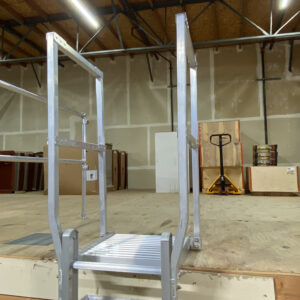
What Is a Fixed Access Ladder?
A fixed access ladder is a ladder that is permanently mounted to a building, wall, roof edge, platform, tank, tower, or piece of equipment. These ladders are commonly used where regular access is needed but a stairway is not practical because of space, cost, or building layout.
Common applications include:
- Roof access
- Mechanical equipment access
- Roof hatch access
- Mezzanine access
- Tank access
- Equipment platform access
- Elevator pit access
- Maintenance access
- Utility and industrial access
Fixed ladders are often custom or semi-custom because height, mounting surface, parapet conditions, roof layout, clearances, and safety requirements can vary from project to project.
Common Types of Fixed Access Ladders
The right ladder depends on where the ladder is being installed, what the user needs to access, and what conditions exist at the top and bottom of the ladder.
Wall-Mounted Fixed Ladders
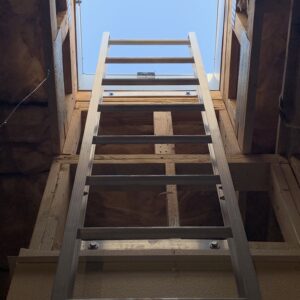
A wall-mounted fixed ladder is one of the most common styles. The ladder is mounted to a wall using brackets or stand-offs. These ladders are often used for roof access, maintenance access, mechanical equipment access, or access to elevated platforms.
Wall-mounted ladders may include walk-thru handrails, security doors, cages, ladder safety systems, rest platforms, or custom brackets depending on the project.
Roof Access Ladders
Roof access ladders are used to reach a roof from grade, a lower roof, a platform, or through a roof hatch. They are commonly used on commercial buildings, warehouses, schools, apartment buildings, and industrial facilities.
A roof access ladder may need to account for the finished floor height, roof height, parapet height, roof hatch location, wall construction, roof edge conditions, and the required transition at the top of the ladder.
Walk-Through Ladders
A walk-through ladder allows the user to climb through the side rails at the top of the ladder. The side rails typically extend above the landing surface to provide a handhold while transitioning off the ladder.
Through ladders are commonly used when the user climbs straight through the ladder onto a roof, platform, or landing.
Side-Step Ladders
A side-step ladder is used when the user climbs to the top of the ladder and then steps sideways onto the landing or platform by stepping off to the left OR the right. These ladders may be used when the ladder cannot line up directly with the access point.
Caged Fixed Ladders
A caged fixed ladder includes a cage or basket guard around the climbing area. Cages have historically been used on taller fixed ladders, but current federal OSHA rules have moved toward ladder safety systems or personal fall arrest systems for many new fixed ladders over 24 feet. CAL/OSHA is more strict with a height of 20′ requiring fall protection.
Fixed Ladders with Ladder Safety Systems
A ladder safety system usually includes a rigid rail or cable system attached to the ladder, along with a sleeve or trolley that connects to the user’s harness. These systems are commonly used where fall protection is required for taller fixed ladders. It allows the climber to be 100% tied off during their ascent.
The ladder and safety system should be reviewed together so the safety system does not interfere with climbing clearance, ladder cages, brackets, platforms, or roof access. The ladder should also be capable of with standing the loads required by ANSI A14.3 and the fall protection manufacturer’s standards.
Fixed Ladders with Platforms
Some ladder conditions require a landing or rest platform. Platforms may be needed because of ladder height, fall protection requirements, offset ladder sections, or a specific access condition.
Platforms can also be helpful when there are obstructions, multiple roof levels, or a need to break up a long vertical climb.
Common Materials for Fixed Access Ladders
Fixed ladders are commonly made from aluminum, steel, galvanized steel, stainless steel, or fiberglass. The best material depends on the environment, project specification, corrosion exposure, appearance, and budget.
Aluminum Fixed Ladders
Aluminum is one of the most common materials for fixed access ladders. It is lightweight, corrosion resistant, and easier to handle than steel. Aluminum is a strong choice for many rooftop and exterior access applications.
Aluminum is often preferred because it has a clean appearance, performs well outdoors, and does not usually need a standard painted finish.
Steel Fixed Ladders
Steel fixed ladders are strong and commonly used in industrial or heavy-duty applications. Steel is often specified when the project requires a painted finish, higher impact resistance, or a specific structural design.
Steel ladders are heavier than aluminum and usually require a protective finish such as primer, paint, galvanizing, or powder coating.
Galvanized Steel Fixed Ladders
Galvanized steel ladders are steel ladders coated with zinc for corrosion protection. They are commonly used outdoors or in industrial environments where corrosion resistance is important but aluminum is not preferred.
Stainless Steel Fixed Ladders
Stainless steel ladders are used in environments where corrosion resistance, washdown capability, or cleanliness is especially important. This may include food processing, water treatment, marine, chemical, or other harsh environments. A stainless steel ladder has many advantages but will
Fiberglass Fixed Ladders
Fiberglass ladders are used in special environments where electrical resistance or chemical resistance is important. They are less common for standard roof access but may be appropriate for utility, electrical, or certain industrial applications.
If you are still deciding on material, read our guide on Aluminum vs Steel Fixed Access Ladders.
Common Fixed Ladder Safety Accessories
Safety accessories should be reviewed before ordering the ladder. It is much easier to design the ladder correctly up front than to add components later.
Walk-Thru Handrails
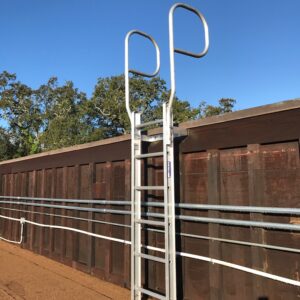
Walk-thru handrails extend above the landing surface and provide a handhold as the user transitions on or off the ladder. They are common on roof access ladders and platform access ladders.
Safety Gates
A safety gate can be used at the top of a ladder opening, roof hatch, platform, or guardrail opening. Gates help protect openings where a person could fall through or step into the ladder opening.
Ladder Cages
Ladder cages are basket-like guards installed around the climbing area. They are often made with hoops and vertical straps or bars.
Cages may still be used in certain applications, but they should be reviewed carefully against current OSHA, Cal/OSHA, project specifications, and site safety requirements.
Ladder Safety Systems
A ladder safety system connects the climber to a carrier, such as a rigid rail or cable. These systems are commonly used on taller fixed ladders where fall protection is required.
The user is typically responsible for the required personal protective equipment, including a compatible full body harness and connector.
Rest Platforms and Landing Platforms
Rest platforms and landing platforms may be required on taller ladders or where ladder sections are offset. Platforms provide a horizontal surface for transition, rest, or access. Crossover platforms can be used when going up and over mechanical equipment, parapet walls, or other objects that restrict safe access to different areas of your work area.
Security Doors and Covers
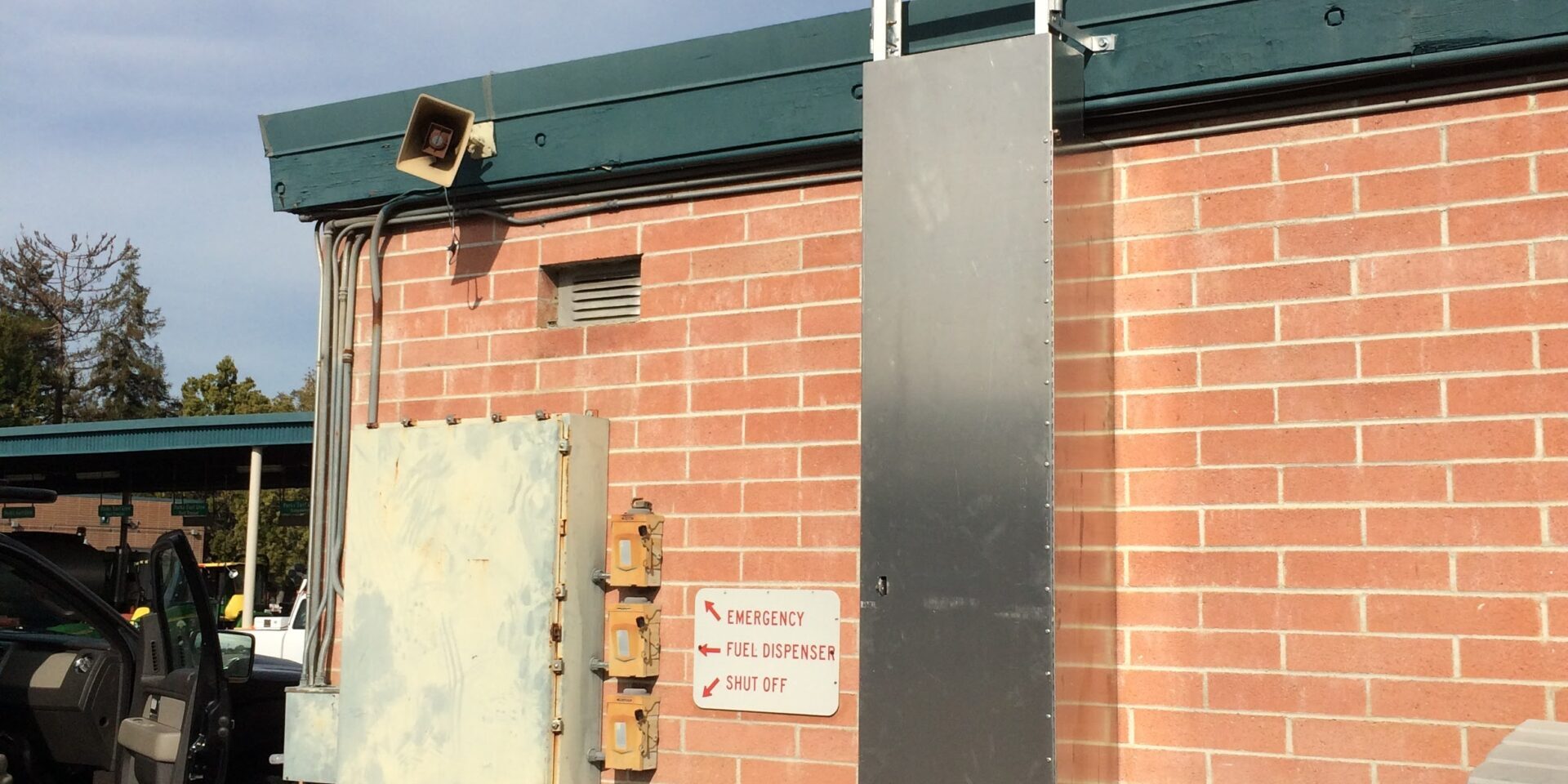
A ladder security door or cover helps restrict unauthorized access. These are common on exterior roof access ladders where the ladder begins near grade or in an area accessible to the public.
Custom Wall Brackets
Wall brackets or stand-offs connect the ladder to the building or structure. The bracket size depends on the wall condition, required stand-off distance, obstructions, gutter conditions, roof edge, parapet, and structural backing. It is important to maintain the minimum required clearance to allow room for the climber’s hand and feet while they use the ladder.
The ladder and brackets must be attached to a suitable structure. Attachment to sheet metal, siding, panels, or weak backing may not be adequate unless properly reinforced or designed by others.
For a deeper breakdown, read our guide on Fixed Ladder Safety Accessories.
Basic Measuring Considerations
Accurate measurements are important before ordering a fixed access ladder. Small mistakes in height, parapet dimensions, or wall conditions can create field problems during installation.
Before requesting a quote, it is helpful to gather:
- Overall vertical height
- Lower walking surface elevation
- Upper landing or roof elevation
- Parapet height, if applicable
- Wall material
- Desired ladder width, if specified
- Required stand-off distance. Make note of any objects that change the depth of the wall (i.e. gutters, eaves, coping, etc.)
- Photos of the wall and roof edge are always nice to have
- Any project drawings or specifications
- Whether walk-thru handrails are needed
- Whether a cage or ladder safety system is required
- Whether a security door is needed
- Jobsite location
- Delivery or pickup preference
- Deliveries should be noted if appointment, liftgate, service, limited access, or construction site deliveries are needed.
For a more detailed breakdown, read our guide on how to measure for a fixed access ladder.
General OSHA and Cal/OSHA Considerations
Fixed ladders must be selected, designed, installed, and used in accordance with applicable safety standards, project requirements, and local jurisdiction requirements.
In California, Cal/OSHA Title 8 includes rules for fixed ladders. Federal OSHA also has requirements for fixed ladders, fall protection, cages, wells, platforms, and ladder safety systems.
This is only a general summary and should not be treated as engineering, legal, or jobsite safety advice.
Ladder Design and Anchorage
Fixed ladders and their fastenings must be designed for the required loads. The ladder, brackets, anchors, and supporting structure all matter.
A ladder may be properly fabricated, but if it is attached to the wrong surface or installed without proper backing, the complete installation may not be safe or compliant.
Rung Spacing and Clearances
Fixed ladder rungs are generally required to be uniformly spaced. Clearances around the ladder are also important so the user has enough room to climb safely.
Clearances should be reviewed for the space behind the rungs, width between side rails, side clearance from obstructions, climbing-side clearance, and the transition at the top of the ladder.
Fall Protection for Taller Fixed Ladders
For taller fixed ladders, fall protection requirements become especially important.
Federal OSHA requires many fixed ladders that extend more than 24 feet above a lower level to be equipped with a personal fall arrest system or ladder safety system. Existing ladders, cages, wells, replacement sections, and compliance deadlines should be reviewed carefully.
California projects should also be reviewed under Cal/OSHA requirements, project specifications, and any local authority having jurisdiction. Cal/OSHA requires fall protection on any ladder over 20′.
Installation Responsibility
The ladder supplier can provide a ladder designed for the intended application, but the installer, contractor, building owner, or project engineer must confirm that the ladder is properly anchored to a suitable structure.
Anchorage should be reviewed when attaching to metal siding, parapets, roof framing, CMU block, concrete walls, wood framing, existing structures, tanks, or equipment frames.
When in doubt, consult the project engineer, architect, safety professional, or authority having jurisdiction.
Aluminum Fixed Access Ladders from Industrial Ladder and Scaffolding
Industrial Ladder and Scaffolding supplies fixed access ladders for contractors, building owners, maintenance teams, and facilities throughout Northern California.
We can help with:
- Aluminum fixed access ladders
- Roof access ladders
- Walk-thru handrails
- Ladder cages
- Security doors
- Custom wall brackets
- Ladder safety accessories
- Roof hatch and ladder coordination
- Material quotes from plans
- Local pickup and delivery options
For California projects, we can help review drawings, photos, and general access conditions before quoting. We do not replace the project engineer, architect, installer, or safety professional, but we can help identify the ladder style, size, material, and accessories commonly used for the application.
Need Help Measuring or Quoting a Fixed Access Ladder?
If you need a fixed access ladder for a commercial, industrial, or rooftop access project, send us your drawings, photos, and basic measurements. Our team can help review the access condition and provide a material quote. For local support, custom ladder questions, or pickup options in Northern California, contact Industrial Ladder and Scaffolding through AnyLadder.com. If you already know the size and product you need and want to order online for shipment, visit AnyHatch.com for fixed access ladders available online and other roof hatches and access ladder products.
Related fixed ladder guides:
How to Measure for a Fixed Access Ladder
Aluminum vs Steel Fixed Access Ladders
Fixed Ladder Safety Accessories Explained
Cal/OSHA Fixed Ladder Requirements for California Projects
Roof Access Ladders and Roof Hatches[/vc_column_text][/vc_column][/vc_row]