Fixed Ladder Safety Accessories: Cages, Walk-Thru Handrails, Gates, Platforms, and Security Doors
Fixed access ladders are often quoted with more than just the ladder itself. Depending on the height, roof condition, access point, building layout, and project requirements, the ladder may need safety accessories to help the user climb, transition, and access the roof or platform safely.
Common fixed ladder accessories include walk-thru handrails, safety gates, ladder cages, ladder safety systems, security doors, rest platforms, step-off platforms, and parapet crossover platforms.
At Industrial Ladder and Scaffolding, we help contractors, building owners, facility managers, and maintenance teams review fixed ladder conditions throughout Northern California. This guide explains common fixed ladder safety accessories and when they may be used.
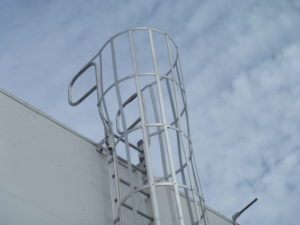
Why Fixed Ladder Accessories Matter
The ladder itself is only one part of a safe access system. The user also needs to safely approach the ladder, climb it, transition off the ladder, and access the roof, hatch, platform, or work area.
Safety accessories may be needed for:
- Safer transition at the top of the ladder
- Fall protection
- Roof hatch access
- Parapet crossover access
- Unauthorized access prevention
- Tall ladder climbs
- Offset ladder sections
- Jobsite-specific obstructions
- Project specifications
- OSHA or Cal/OSHA requirements
The right accessories should be reviewed before the ladder is fabricated or ordered. It is usually easier and cleaner to include the correct accessories from the beginning than to modify the ladder later.
For a general overview of fixed ladder types and materials, read our Fixed Access Ladder Guide.
Walk-Thru Handrails
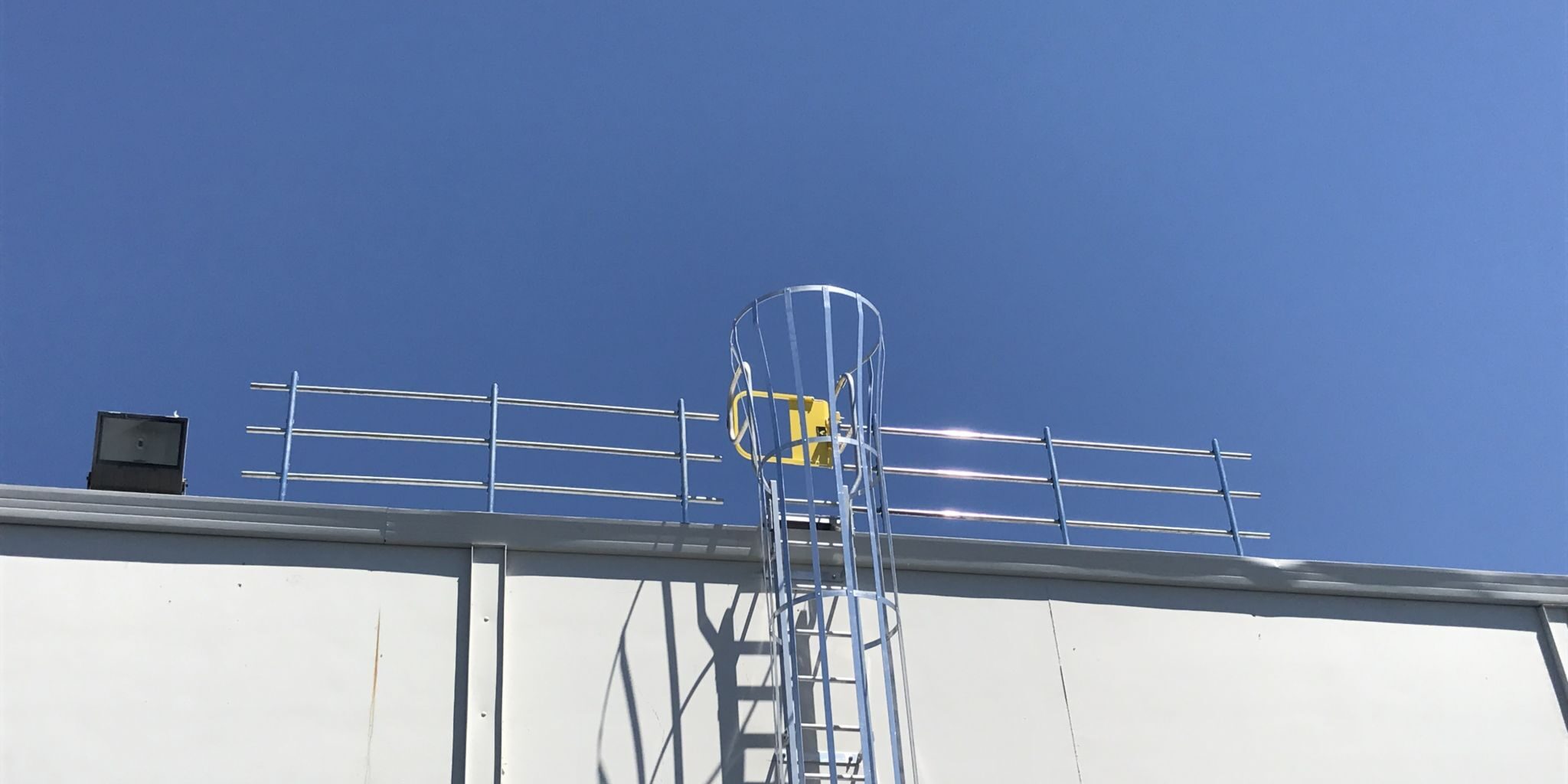
Walk-thru handrails extend above the top landing surface and give the user a handhold while stepping on or off the ladder.
These are commonly used when the ladder accesses:
- A roof
- A platform
- A mezzanine
- A landing
- An equipment deck
Walk-thru handrails are important because the transition at the top of a ladder is one of the most critical points of use. The user is moving from a vertical climb to a walking surface, so having a stable handhold can make the transition safer and more controlled.
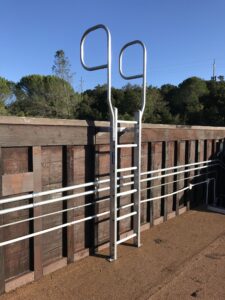
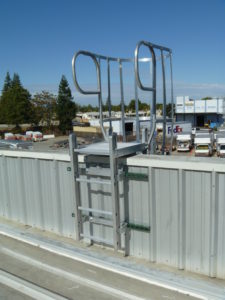
Walk-Thru Rails with a Step-Off Platform
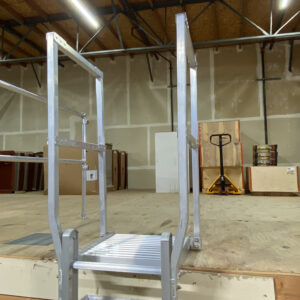
Some ladder conditions require more than simple walk-thru handrails. A step-off platform may be used at the top of the ladder when the user needs a more controlled landing area before stepping onto the roof, platform, or over a parapet condition.
A walk-thru rail with a step-off platform may be useful when:
- The roof edge condition is awkward
- The ladder does not land directly onto a clean walking surface
- The user needs a small landing area before stepping sideways or forward
- The roof surface is not directly aligned with the ladder
- The project drawings call for a platform at the top
- The ladder transition needs to feel more stable for maintenance users
- The roof is slick and a surface with more traction is desired
The step-off platform gives the user a small surface to stand on at the top of the ladder. This can make it easier to transition from the ladder to the roof or adjacent walking surface.
Safety Gates
Safety gates are commonly used at ladder openings, roof hatch railings, guardrail openings, and platform access points. A gate helps protect the opening when the ladder is not being used.
Safety gates are often used with:
- Roof hatch railings
- Platform openings
- Mezzanine openings
- Ladderway openings
- Guardrail systems
- Parapet crossover platforms
A safety gate should be selected based on the opening size, direction of travel, surrounding railing, and project requirements.
Ladder Cages
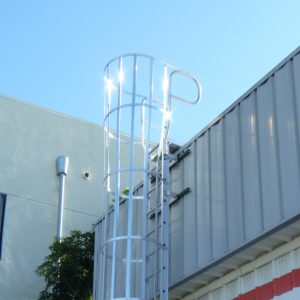
A ladder cage is a guard installed around the climbing area of a fixed ladder. Ladder cages are typically made with hoops and vertical bars or straps.
Cages have historically been used on taller fixed ladders. However, federal OSHA requirements now place greater emphasis on ladder safety systems or personal fall arrest systems for many fixed ladders over 24 feet.
A ladder cage may still be used in certain applications, but it should be reviewed carefully against:
- Ladder height
- Federal OSHA requirements
- Cal/OSHA requirements
- Project specifications
- Fall protection requirements
- Ladder safety system compatibility
- Site conditions
A cage should not interfere with the user’s ability to climb or with any required ladder safety system. That being said, some of the safest ladder systems include a fall arrest system in conjunction with the cage. The cage can act as a rest for your back foot in mid climb.
Ladder Safety Systems
A ladder safety system is a fall protection system that connects the climber to a carrier attached to the ladder. The carrier may be a rigid rail or cable system. The user connects to the system with compatible personal protective equipment.
Ladder safety systems are commonly used for taller fixed ladders where fall protection is required.
A ladder safety system should be reviewed with the ladder design because it may affect:
- Climbing clearance
- Bracket placement
- Cage compatibility
- Top and bottom access
- Fall protection tie-off requirements
- User equipment requirements
The ladder supplier can help coordinate the ladder design, but the building owner, employer, contractor, installer, or safety professional should confirm the complete fall protection requirements for the site.
Rest Platforms and Landing Platforms
Rest platforms and landing platforms may be used on taller ladders, offset ladder sections, or access points where the user needs a horizontal surface during the climb.
Platforms may be used to:
- Break up a long vertical climb
- Create an offset between ladder sections
- Provide a safer transition point
- Provide access around an obstruction
- Connect to a roof, mezzanine, or equipment platform
- Meet project or code requirements
A platform should be reviewed for size, guardrails, gates, support, anchorage, and how the user enters and exits the platform.
Parapet Crossover Platforms
A parapet crossover platform is used when a ladder must provide access over a parapet wall. Instead of having the user climb up to the top of the parapet and awkwardly step over the wall, a crossover platform can provide a more controlled transition.
Parapet crossover platforms are commonly considered when:
- The roof has a parapet wall with a return height of greater than 16″. In this scenario a return ladder would be needed
- The parapet is too tall or awkward to step over safely
- The ladder stops on the outside face of the wall
- The user needs to cross from the exterior side to the roof side
- Roof access must be more controlled and stable
- A standard walk-thru ladder does not provide a clean transition
- The project drawings require a platform over the parapet
A parapet crossover platform may include:
- Return ladder section
- Platform over or near the parapet
- Guardrails on both sides
- Safety gate at roof access
- Toe boards, if required
- Custom brackets or supports
- Anchorage to suitable structure
The platform, guardrails, supports, and anchorage should be reviewed carefully. Parapet conditions vary widely, so photos and measurements are very important before quoting.
Ladder Security Doors and Covers
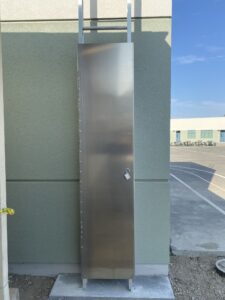
A ladder security door or cover helps restrict unauthorized access to a fixed ladder. These are commonly used when a ladder starts near grade or in an area accessible to the public.
Security doors are often used on:
- Schools
- Commercial buildings
- Apartment buildings
- Public-facing buildings
- Exterior roof access ladders
- Warehouses
- Utility areas
A security door does not replace required fall protection or safe ladder design, but it can help reduce unauthorized climbing.
Custom Wall Brackets
Wall brackets connect the ladder to the building or structure. They also create the required stand-off distance from the wall.
Custom brackets may be needed when there are:
- Roof overhangs
- Gutters
- Parapets
- Wall projections
- Pipes or conduit
- Uneven wall surfaces
- Metal panels
- Structural framing offsets
- Required clearance behind the ladder
The ladder and brackets must attach to a suitable supporting structure. Attachment to sheet metal, siding, light-gauge panels, or weak backing may not be adequate unless properly reinforced or reviewed by others.
For measurement help, read our guide on how to measure for a fixed access ladder.
Roof Hatch Railings and Hatch Gates
When a fixed ladder accesses a roof hatch, the hatch opening may require a railing system and self-closing gate. Roof hatch railings help protect the opening and provide a safer transition when someone exits or enters the hatch.
Roof hatch railings are often paired with:
- Roof hatches
- Safety gates
- Grab rails
- Hatch safety rails
- Ladder Up Safety Posts
- Ladder safety systems
The roof hatch size, curb height, opening direction, and roof layout should be reviewed before selecting a railing system.
How to Decide Which Accessories Are Needed
The right ladder accessories depend on the project. Before ordering, review:
- Ladder height
- Mounting surface
- Roof edge condition
- Parapet height
- Top access condition
- Bottom access condition
- Whether the ladder is indoors or outdoors
- Whether the ladder is accessible to the public
- Project drawings and specifications
- OSHA and Cal/OSHA requirements
- Fall protection requirements
- Whether the ladder accesses a roof hatch, platform, or equipment
Photos are very helpful. Take pictures of the proposed ladder location, roof edge, parapet, mounting wall, obstructions, and access point.
General OSHA and Cal/OSHA Reminder
Fixed ladders, safety accessories, platforms, cages, and fall protection systems should be reviewed against applicable OSHA, Cal/OSHA, project specifications, and local jurisdiction requirements.
Federal OSHA 1910.23 includes general ladder requirements such as rung spacing, fixed ladder width, corrosion protection, and safe ladder use. OSHA 1910.28 addresses fall protection requirements, including requirements for many fixed ladders over 24 feet. Cal/OSHA Title 8 Section 3277 includes California fixed ladder requirements. This article is only a general guide and should not be treated as engineering, legal, or jobsite safety advice.
Helpful references:
- OSHA 1910.23 – Ladders
- OSHA 1910.28 – Duty to Have Fall Protection
- Cal/OSHA Title 8 Section 3277 – Fixed Ladders
Need Help Choosing Fixed Ladder Safety Accessories?
Industrial Ladder and Scaffolding supplies fixed access ladders, roof access ladders, walk-thru handrails, step-off platforms, parapet crossover platforms, ladder cages, security doors, custom brackets, and related ladder accessories for commercial and industrial projects throughout Northern California.
If you need help reviewing a ladder condition, send us your drawings, photos, measurements, and project specifications. Our team can help review the access condition and provide a material quote.
For customers outside Northern California, select access products may also be available for online ordering through AnyHatch.com.